The missing piece of my Whare Tapa Whā
In mid-2025, I hit a wall. I was stressed, scattered, and couldn't name what was wrong – if anything, everything was all a little bit shit. One weekend, I was spiralling. Stressed, angry, sad, frustrated, hormonal – enough to screw with my amygdala. I had so many things going on in my head – I couldn’t figure out which area to focus on first, let alone ask for help. I turned on my phone’s audio recorder, found a quiet spot in my room and basically spat out my life story; everything that was on my heart and mind that day.
This recording is still on my phone and it starts like this “I need some help. I’m going through what I think is maybe a mid-life crisis. There’s a back story, there’s a lot going on. And I need some advice, some mentoring and a roadmap to get through this”.
I talked non-stop for 20 minutes, chucked it into a transcriber, and uploaded it to Chat GPT. From there, I started a process of self-therapy with the help of AI – a taboo subject I know. My AI tools are set with preferences towards kaupapa Māori frameworks, and after working through the roadmap it offered – which was framed as a reawakening, not a crisis – I began daily check-ins.
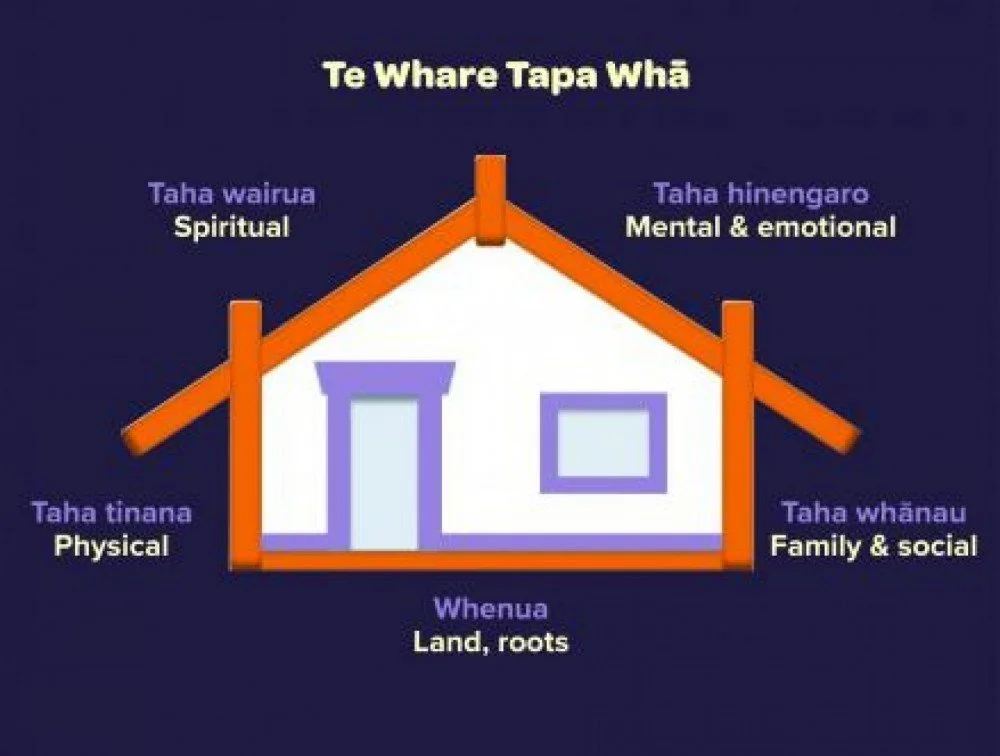
Perhaps unsurprisingly, the AI tool used Te Whare Tapa Whā as a framework for our check-ins. Te Whare Tapa Whā is Tā Mason Durie’s model that describes well-being as a whare, where health depends on balancing four taha: tinana, hinengaro, whānau, and wairua. When all four taha are in balance, and grounded in Whenua – a person thrives. But if one is neglected or out of balance, it impacts overall well-being. These check-ins helped me reflect holistically and gave me small areas of focus depending on which taha needed attention.
One of the big issues I spoke at length about during my download/upload, was our living situation. We had moved six times in ten years. These weren’t random house moves – there was a theory to the madness – at least it started that way.
The first two moves were strategic – we sold our first home and moved into a rental for 6 months whilst our second whare was being built. Our new whare meant we could have my mum live with us during her battle with cancer – it was also where she lost her battle. Grief, especially the grief of losing your Mum, is something I don’t think anyone, or anything can really prepare you for. To say that all four walls of my whare tapa whā came crumbling down is an understatement.
The most painful part I remember is the deep loneliness I experienced and the shame that came with this. I can't say why I felt so much shame around my loneliness. I wish I had expressed this more back then as no doubt my siblings and tamariki experienced similar feelings given the part Mum played in all our lives.
We put our whare on the market not long after and moved to my partner's whānau papakāinga as we prepared to build our next one. Five of us crammed into a 2.5 bedroom cottage waiting for our plans to be finalised, and COVID arrived. The costs of building supplies sky-rocketed, whilst housing values plummeted. We quickly learned that we were going to be up shit creek if we continued with the build as planned.
Whilst we worked out our next steps, we moved back to the Bay for the first time in over 20 years to rent a bigger whare. Moving to the Bay was like going home. I felt a renewed sense of connection to whenua and to my parents, all of whom had since passed – way before their time. I was closer to my siblings, and to the moana, which became essential rongoa as I went through struggles around my relationship with alcohol. During a year of being alcohol free and figuring out that part of my life – my relationship of 25+ years also hit some speed wobbles.

One of the many sunsets from Titahi Bay beach witnessed during my hīkoi
Not long after moving again to another rental in the Bay, I took redundancy from my corporate job and decided to give self-employment a crack. Now with less income coming in and figuring out whether I had the confidence to give business ownership a go, we were really unsure what to do next. Or at least, I was really unsure – and this is coming from a lady that can’t start the day without a plan. My hinengaro struggled with the uncertainty and desperate need for control.
There were lots of amazing memories made in each and every whare – birthday celebrations, welcoming our daughter home and farewelling her again. With some of our savings, we were able to buy an investment property. After 15 years in Australia, my sister and her whānau finally had a home to land in. Whānau first, always.
Moving houses, setting up shop again, we were becoming pretty good at it. Moving all the house plants was always the hardest part. Or maybe that was just the easiest thing to focus on, because the harder thing was the conversation my partner and I weren't having. Where did we want to put roots down again? Or rather, did we want to put roots down again, together?
There were plenty of times when the thought of separating whilst we had huge financial pressures seemed too risky that it would quickly quieten the thought. But now, with less financial burden, the idea would often flicker in my mind. This didn’t just go away on its own. We have done our fair share of couples therapy. There were some very long walks, a heap of self-work and deep kōrero with friends and family.
To help bring some focus, we explored other ways of investing our money and started researching and watching a bunch of videos on investment strategies. But our attempts to upskill in financial literacy caused more arguments than what it was worth and we couldn’t agree on the best approach.
So, we went back to what we know and are most comfortable with. We made a fairly quick decision and put our rental on the market. I had to break it to my sister that it was time for them to find somewhere else to live – which was not an easy call to make. But the time had come for us to find a new whare.
The house hunt didn’t come easily. There wasn’t much out there that we liked, or that we were comfortable paying for. We had a go at several, but missed out – holding onto the whakaaro that the right one was out there, if we were patient.
And then, at auction, we finally got our new whare. I had never won anything like that before in my life! We were both so happy, and the best part was telling our kids and hearing how happy they were also. I knew all the moving had affected them, but their resilience likely hid how much of an impact.
Moving day came – and these pros weren’t mucking around. We splashed out on some new furniture and decor – because why the hell not – and from the first night, we were ready to manaaki our whānau and friends. We’ve had more dinners and parties in the first few months of living in our new whare than in the last 4-5 years. We’ve loved sharing our whare with those who have supported us through the ups and downs.
Gradually, waking up in our whare morning after morning, I’ve started to notice feelings that were difficult to recognise at first. Peace, tau, gratitude, happiness – sometimes deliriously so. Whilst I know this completely smacks of privilege, I also know that this didn’t come easy for us.
I have felt a comfort over the last few months – quiet, steady – that’s helped me face everyday challenges with more confidence and ease. On reflection, whilst some of my past issues were definitely issues, the instability of not having a strong connection to whenua, not knowing when and where, or if, we would put down roots again, left me a little unstable, especially when the wind got up.
Now, with roots firmly in place, I feel secure, safe, strong, loved. My tinana rests. My hinengaro has space to breathe. Whānau and friends gather under our roof. And my wairua – that thing I couldn't name when I was spiralling into the recorder on my phone – has finally landed. And I know Mum is with us every day.
Ok 2026! Let the reawakening begin!
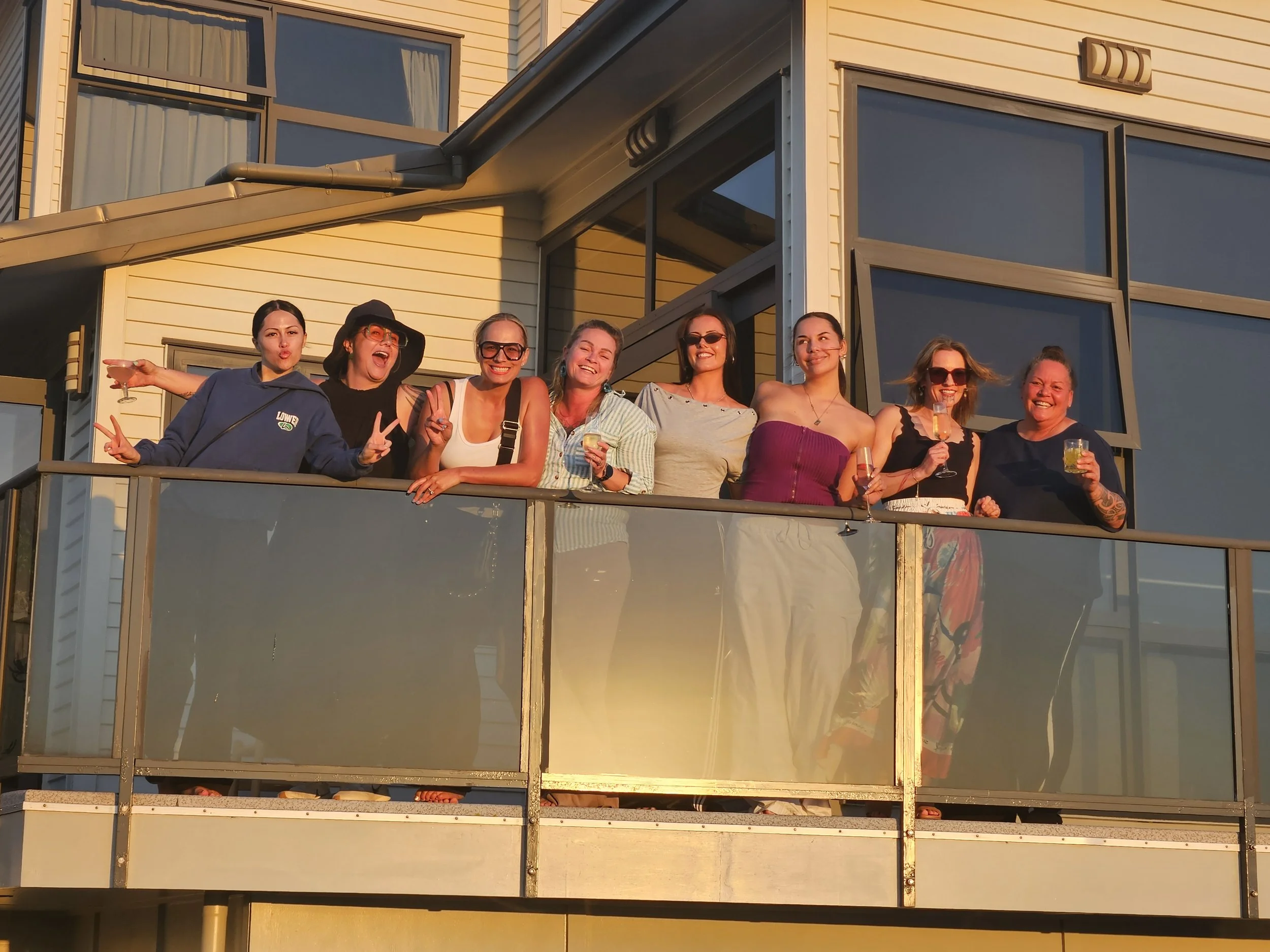
Birthday celebrations at the new whare with whānau
